
Macroeconomy and Multi-Asset ETF analysis: Week of 1 June 2026
Macroeconomy
In the U.S., the May ISM Manufacturing Index rose to 54.0, its highest reading since mid‑2022 and the fifth consecutive month in expansion territory. New orders and production accelerated, but the prices‑paid component remained very elevated at 82.1, reinforcing an expansion but sticky inflation backdrop.
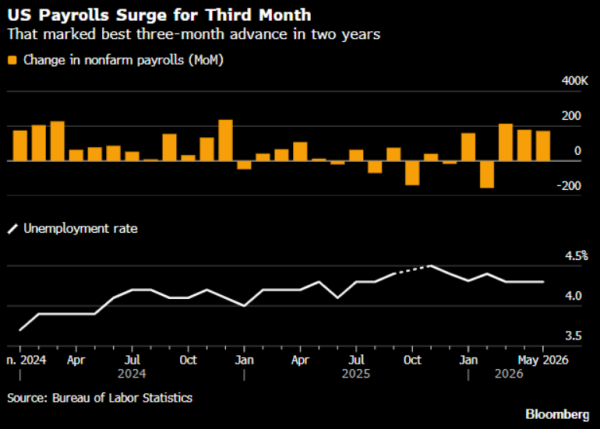
The U.S. May employment report capped the week with a clear signal that the labour market remains too firm to justify imminent Fed easing. Nonfarm payrolls rose 172,000 versus expectations of 85,000, and unemployment held at 4.3%. The upside surprise came on top of previously firming labour indicators, including April job openings rising to near a two‑year high, and pushed markets toward a higher for longer rate path rather than the earlier hope for 2026 cuts.
Eurozone flash May CPI confirmed that the disinflation phase has stalled. Headline inflation accelerated to 3.2% year‑over‑year (from 3.0% in April), the highest since September 2023 and in line with expectations, while core inflation picked up to 2.5% year‑over‑year from 2.2%, exceeding consensus. Germany was a relative outlier with HICP at 2.7% year‑over‑year versus 2.8% expected and a 0.1% month‑on‑month fall in CPI as local energy pressures eased. By contrast, France, Italy and Spain saw sharper energy‑driven jumps, underscoring the uneven impact of the conflict across member states.
(Geo)Politics
In the middle of last week, Iran launched ballistic missiles and drones at U.S. military installations and regional allies, including the U.S. naval base in Bahrain and an airbase in Kuwait, and struck an oil tanker en route to Iran. The U.S. responded with strikes on an Iranian ground‑control station on Qeshm Island in the Strait of Hormuz.
At the same time, Lebanon and Israel agreed to renew their fragile ceasefire and establish pilot zones where the Lebanese Armed Forces would have exclusive control, while France called on Israel to end its illegal occupation and China urged both Washington and Tehran to honour ceasefire terms and avoid renewed warfare.
U.S. political pressure against continued hostilities grew after the House passed a war‑powers resolution, signalling rising domestic unease with an open‑ended conflict and adding a modest de‑escalation bias to the geopolitical narrative.
Equity
Global equity markets were dragged by the semiconductor sector followed by the increasing interest rate hike expectation after the strong labour data in the U.S. South Korea (EWY) was also impacted by the local election turmoil on top of semiconductor sector correction.
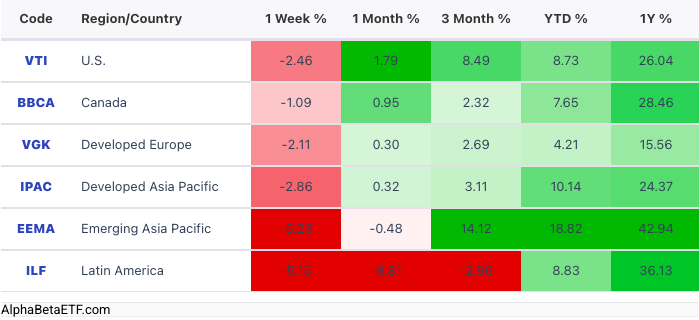
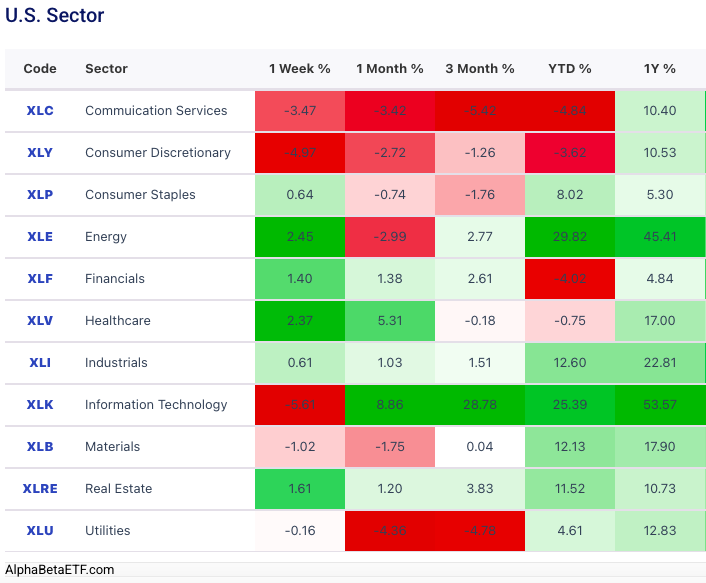
Late in the week, the AI trade hit an air pocket. Following Broadcom’s earnings, in which the company beat on revenue and EPS but guided Q3 AI chip sales to 16 billion dollars (below the 17.2‑billion consensus) and without raising its full‑year AI semiconductor target, Semiconductor (SOXX) and Information Technology (XLK) were dragged sharply lower. Healthcare (XLV) led gains as investors rotated into defensive sector with less direct sensitivity to oil or AI‑capex cycles. Financials (XLF) , especially Large Banks (KBWB) and Insurance (KIE) , benefited from the move up in yields.
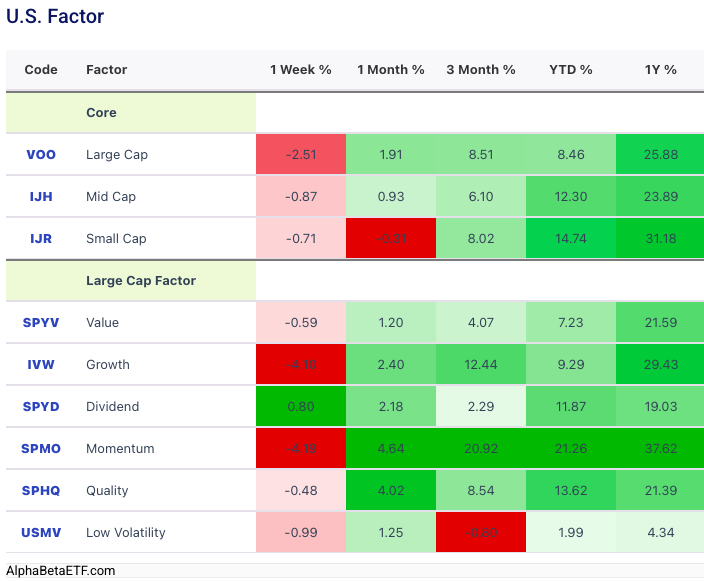
Value (SPYV) and Dividend (SPYD) factors beat Growth (IVW) decisively as the market punished long‑duration names and rewarded defensives and balance‑sheet‑heavy cyclicals.
Fixed Income
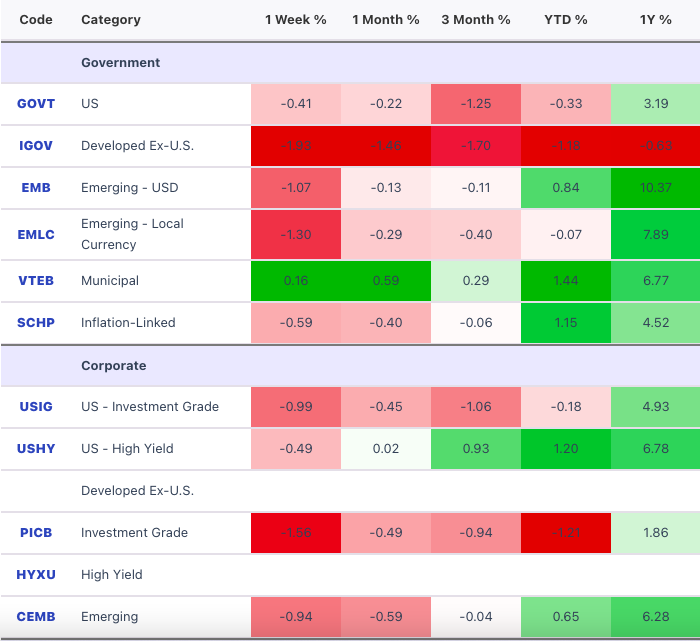
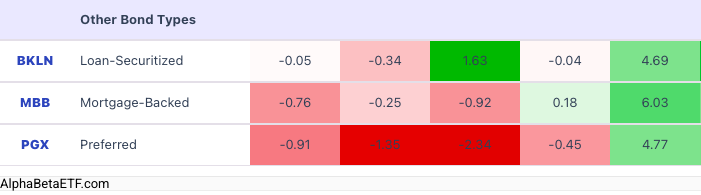
By week’s end, the upside surprise in U.S. payrolls triggered a more forceful move with yields spiked, as the market cut back expectations for Fed cuts and priced a prolonged period of restrictive policy.
Commodity
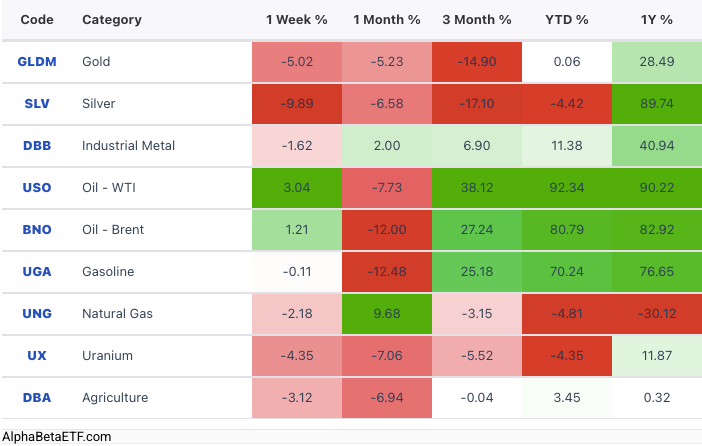
Oil (USO, BNO) prices continued to rise as U.S. crude inventories fell for a seventh consecutive week, and the IEA warned global stocks could hit critical levels ahead of peak summer demand if current draws persist. Gold (GLDM) and Silver (SLV) saw significant correction as higher oil reinforced inflation concerns and the strong US job report raised the prospect that central banks would maintain or even add to tightening.
Currency
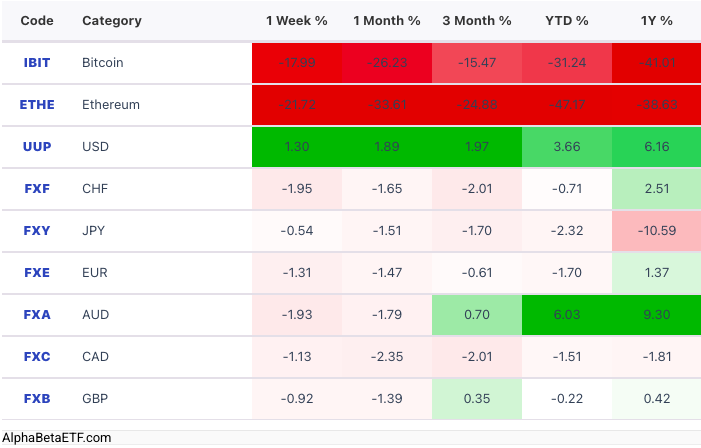
Bitcoin (IBIT) remained under pressure as the strong payrolls report and higher yields drove a broader rotation away from high‑beta risk assets.U.S. dollar (UUP) gained during the week, underpinned by higher U.S. yields and solid labour data.
The Week Ahead
US: May CPI
UK: April GDP, Industrial Production
Japan: Q1 GDP, April Industrial Production
China: May CPI